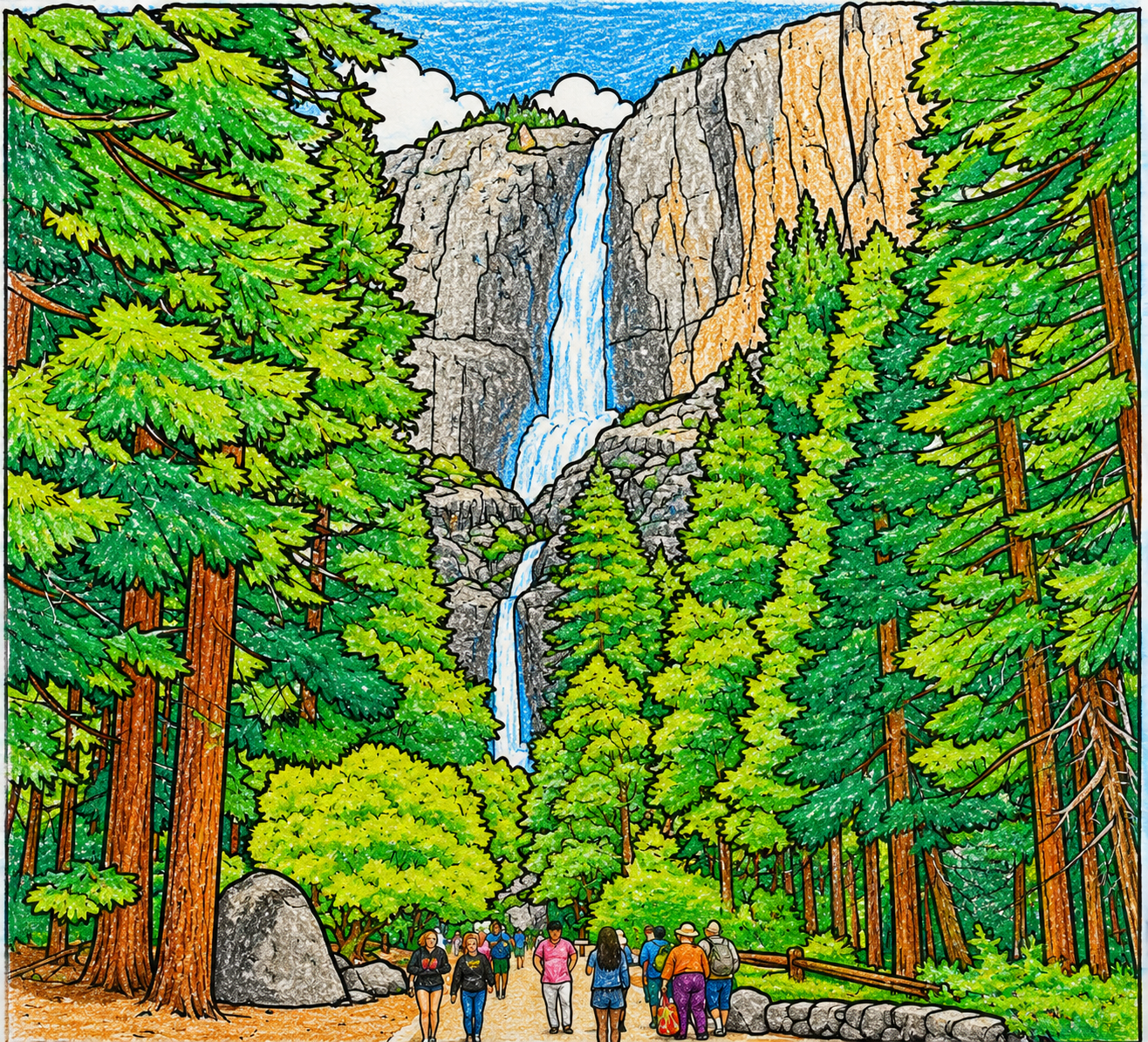
Creating brightness and contrast with crayons or colored pencils in a coloring book requires a mix of pressure control, color selection, and blending techniques to overcome the typically “flat” look of wax. As reading through the following tips, note how they were used in the above coloring book page.
Master Pressure Control
The simplest way to create contrast is by varying how hard you press.
-
- Light Tones: Use very gentle pressure for a soft, light base.
- Medium Tones: Increase pressure slightly for your mid-tones.
- Dark Accents: Press firmly for areas of high emphasis, such as deep shadows or borders.
- Consistent Strokes: For a professional look, maintain a consistent direction or use small circular strokes to avoid a patchy texture.
Layer for Richness and Depth
Don’t rely on just one crayon for each section. Layering creates more vibrant “pops” of color.
-
- Color Gradation: Select two colors that are 1–2 shades apart (e.g., a light blue and a dark blue). Layer the light color first as a base, then add the darker shade around the edges or in shadow areas.
- Avoid True Black: Using deep blues, purples, or browns for shadows instead of pure black keeps the drawing from looking flat and heavy.
- Complementary Colors: For high-energy contrast, place complementary colors (opposites on the color wheel) next to each other, like purple shadows against a yellow object.
Techniques for Highlights (Brightness)
Since you can’t easily “erase” back to white with wax crayons, you have to plan your bright spots.
-
- Reserve White Space: Leave small slivers of the white paper untouched to act as your brightest highlights.
- White Crayon Burnishing: Use a white crayon to go over other colors. This acts as a “bridge” that softens the color beneath and creates a luminous, blended look.
- Mixed Media: For a bright, sharp highlight, use a white gel pen or white acrylic marker on top of your finished crayon work.
Advanced Blending for Smooth Transitions
Crayons are waxy, which can make them difficult to blend once the layer is thick. You can address this in a couple of ways.
- Solvent Blending: Use a cotton swab dipped in a tiny amount of baby oil or Vaseline to gently massage the crayon wax. This melts the pigment into the paper for a smoother, paint-like finish.
- Friction Blending: Rubbing the waxy surface with a blending stump or even a paper towel can generate enough heat to smooth out the texture.